

Punjabi Music: History, Evolution, Global Growth and the Business Behind Its Rise
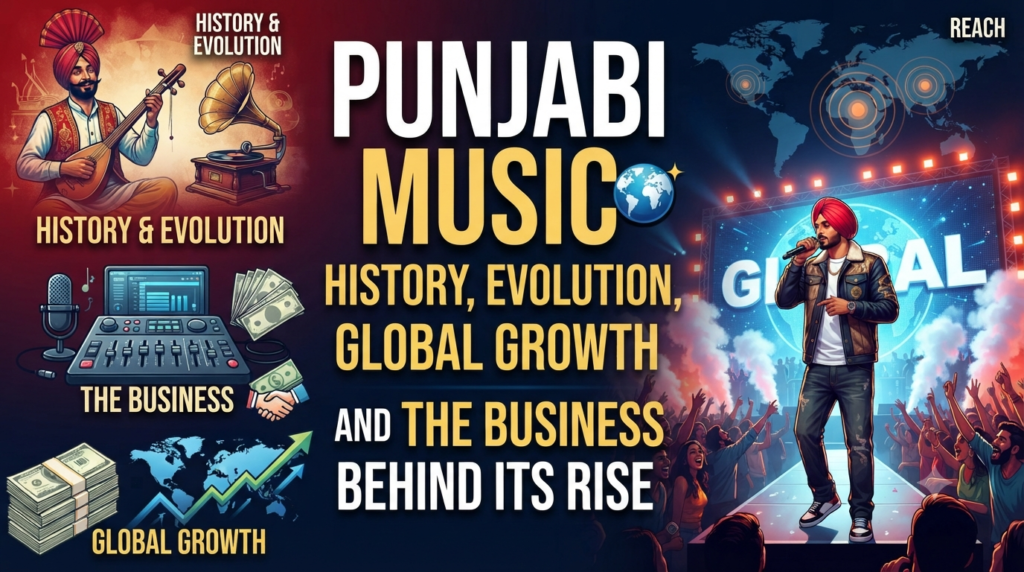
Punjabi music has evolved from traditional folk traditions into a global entertainment industry influenced by pop, hip-hop, streaming and digital platforms.
Punjabi music has evolved from traditional folk melodies into a global entertainment industry. What was once primarily associated with Punjab’s folk culture, weddings and regional celebrations is now consumed across India and international markets. From traditional instruments and folk singers to streaming platforms, independent artists and global collaborations, Punjabi music has developed a distinctive identity with a worldwide audience.
What Makes Punjabi Music Different?
Punjabi music is strongly connected with the culture, language and everyday life of Punjab.
Its appeal comes from several elements:
- Energetic rhythms
- Strong lyrical expression
- Distinctive Punjabi language
- Traditional folk influences
- Powerful vocal styles
- Dance-oriented production
- Modern hip-hop and electronic influences
- Strong connection with Punjabi diaspora communities
Punjabi songs can represent celebration, romance, heartbreak, social experiences, ambition, identity and everyday life.
This combination allows the music to remain culturally rooted while continuously adapting to changing audiences.
The Traditional Roots of Punjabi Music
The foundation of Punjabi music lies in the region’s rich folk traditions.
Traditional forms such as Tappe, Boliyan, Mahia, Jugni and Sufi music have influenced generations of musicians.
Instruments including:
- Dhol
- Tumbi
- Algoza
- Chimta
- Sarangi
- Bugchu
have played an important role in creating the recognizable sound associated with Punjab.
Folk music was traditionally performed at weddings, festivals, village gatherings and other cultural occasions. Many songs were passed from one generation to another through oral traditions rather than formal recording systems.
From Folk Music to Recorded Music
The growth of recording technology changed Punjabi music significantly.
As audio recording became more accessible, Punjabi folk songs could reach audiences beyond local communities. Cassettes and later CDs played a particularly important role in taking Punjabi music into homes across India and among Punjabi communities overseas.
The music industry gradually developed professional singers, lyricists, composers, producers and record labels.
This created the foundation for the modern Punjabi music business.
The Rise of Punjabi Pop
Punjabi music experienced a major transformation when traditional sounds began mixing with modern pop production.
Artists started experimenting with:
- Synthesizers
- Electronic beats
- Western musical influences
- Modern recording techniques
- New vocal styles
- Contemporary songwriting
The result was Punjabi pop music that could appeal to younger listeners while retaining recognizable cultural elements.
Music videos also became increasingly important.
Instead of being consumed only through audio recordings, songs became visual entertainment products.
Punjabi Music and the Diaspora
The Punjabi diaspora has played an important role in the international growth of Punjabi music.
Large Punjabi-speaking communities across countries such as Canada, the United Kingdom, the United States, Australia and parts of Europe have created consistent demand for Punjabi entertainment.
This has helped Punjabi songs travel beyond the geographical boundaries of Punjab.
A song released by an artist in Punjab can now reach listeners around the world almost immediately through digital platforms.
This international audience has also influenced the themes, production styles and collaborations appearing in contemporary Punjabi music.
The Digital Revolution Changed the Industry
The biggest transformation in Punjabi music came with the rise of digital platforms.
Earlier, artists depended heavily on physical music sales, television, radio and traditional distribution networks.
Today, music can reach audiences through:
- YouTube
- Spotify
- Apple Music
- JioSaavn
- Amazon Music
- Short-video platforms
Digital distribution has reduced many of the traditional barriers between artists and listeners.
An independent singer can release a song online without requiring the same distribution infrastructure that earlier generations needed.
YouTube and the Punjabi Music Industry
YouTube has become particularly important for Punjabi music.
Music videos can attract audiences from India as well as international markets.
The platform also provides valuable feedback through:
- Views
- Likes
- Comments
- Shares
- Audience retention
- Geographic data
This information can help artists and music companies understand how listeners are responding to their releases.
However, views alone do not necessarily represent the complete commercial value of a song. Streaming revenue, licensing, live performances, brand partnerships and other rights can also contribute to an artist’s income.
Streaming Has Changed How Success Is Measured
The definition of a successful Punjabi song has changed.
Earlier, music popularity was often judged through cassette or CD sales, radio plays and television exposure.
Today, the industry looks at a broader collection of indicators:
| Metric | What It Shows |
|---|---|
| Streams | Repeated listening and audience consumption |
| Video views | Visual reach and popularity |
| Social shares | Audience engagement |
| Short-video usage | Cultural and viral adoption |
| Playlist placements | Platform visibility |
| Live demand | Ability to attract paying audiences |
| International listeners | Global reach |
No single metric tells the complete story.
A song may have huge social-media visibility while generating different levels of revenue across platforms.
Punjabi Music and the Film Industry
Punjabi music and Punjabi cinema have a strong relationship.
Songs can play an important role in promoting movies, actors and upcoming releases.
A successful film song can increase awareness of a movie before theatrical release, while a popular movie can introduce songs to a much larger audience.
Punjabi films have increasingly used music as part of their wider promotional strategy.
The connection also works in the opposite direction. Popular singers can contribute to a film’s visibility because their existing fan base may already follow their music and social-media activities.
Punjabi Music Is Also Influencing Indian Pop Culture
Punjabi music has moved beyond its traditional audience.
Punjabi-language songs are now regularly consumed by listeners who may not speak Punjabi fluently.
The rhythm, production style and visual presentation can make songs accessible across language boundaries.
Punjabi elements have also appeared in Hindi film music, independent Indian pop, hip-hop and commercial music.
This crossover demonstrates that regional music can influence national popular culture without losing its original identity.
The Growth of Punjabi Hip-Hop
One of the most significant developments in recent years has been the growth of Punjabi hip-hop and rap.
Younger artists have combined Punjabi language and cultural references with global hip-hop production.
Common themes include:
- Personal ambition
- Success
- Relationships
- Urban life
- Social identity
- Struggles
- Lifestyle
- Cultural pride
This has opened Punjabi music to another generation of listeners.
It has also created opportunities for artists to develop careers outside traditional film-music structures.
Independent Artists Are Becoming More Important
The modern music industry has lowered the entry barrier for independent musicians.
Artists can now record, distribute and promote music using digital tools.
Social media allows musicians to build audiences before they become associated with major labels or film projects.
This has created a more competitive environment where an artist’s:
- Music quality
- Branding
- Consistency
- Social-media presence
- Audience engagement
- Visual identity
can all influence career development.
For PBO, this is an important area to watch because independent Punjabi artists could become increasingly significant to the wider entertainment ecosystem.
How Punjabi Artists Can Make Money
The business behind a successful song is more complex than simply earning money from views.
Potential revenue sources can include:
Streaming
Artists, labels and rights holders may receive income from licensed streams depending on their agreements and platform structures.
YouTube
Monetized video content can generate advertising revenue, subject to eligibility, rights ownership and platform policies.
Music Rights
Songs can generate value through different forms of licensing and usage.
Live Performances
Concerts, festivals and private events can become important sources of income.
Brand Partnerships
Established artists may collaborate with companies for advertising and promotional campaigns.
Film Music
Artists may participate in movie soundtracks and related commercial arrangements.
International Shows
The Punjabi diaspora provides opportunities for concerts and live events in international markets.
The actual income distribution depends on contracts, ownership structures, platforms, taxes, production expenses and other commercial factors.
The Importance of Music Rights
Music rights are one of the most important parts of the modern Punjabi music business.
A song can involve multiple contributors, including:
- Singer
- Lyricist
- Composer
- Music producer
- Label
- Publisher
- Video production team
Ownership and licensing arrangements can vary from project to project.
For this reason, a song’s popularity does not automatically mean that every person involved receives the same financial benefit.
Understanding rights is therefore essential when analysing the business side of Punjabi music.
Why Punjabi Music Has Global Potential
Punjabi music has several characteristics that support international growth.
First, there is an established global Punjabi diaspora.
Second, digital platforms allow music to travel instantly.
Third, Punjabi production has increasingly incorporated international sounds.
Fourth, collaborations can introduce Punjabi music to audiences outside the traditional market.
Finally, Punjabi music has a strong visual and performance culture that works particularly well on modern digital platforms.
Challenges Facing the Punjabi Music Industry
Despite its growth, the industry also faces challenges.
Copyright and Piracy
Unauthorized distribution can reduce revenue for artists and rights holders.
Market Saturation
The number of new releases has increased, making it harder for individual songs to stand out.
Dependence on Virality
A song becoming popular on social media does not necessarily guarantee long-term success.
Changing Platform Algorithms
Visibility can depend heavily on recommendation systems and platform trends.
Production Costs
High-quality music videos and promotional campaigns can require significant investment.
Rights Management
Complex ownership and licensing arrangements can create disputes if responsibilities are not clearly defined.
What the Future of Punjabi Music Could Look Like
The next phase of Punjabi music is likely to be increasingly digital and international.
Artificial intelligence, advanced music-production technology, short-form video, streaming platforms and direct-to-fan communication could influence how artists create and promote music.
At the same time, traditional Punjabi sounds are unlikely to disappear.
Instead, the industry may continue combining:
Folk + Pop + Hip-Hop + Electronic Production + Global Influences
This mixture could become one of the defining characteristics of Punjabi music in the coming years.
Why Punjabi Music Matters to PBO
For PollywoodBoxOffice.com, Punjabi music is more than an entertainment category.
It is part of the larger Punjabi entertainment economy.
Music connects with:
- Punjabi cinema
- Actors
- Singers
- OTT
- Live events
- Brands
- Social media
- Overseas audiences
- Independent creators
This makes Punjabi music an important pillar within PBO’s broader Punjabi-first strategy.
Future coverage can go beyond song announcements and include:
- Punjabi music business
- Streaming trends
- Artist career analysis
- Music-label economics
- Concert industry
- Punjabi music’s international reach
- Film music economics
- Emerging independent artists
- Music rights and royalties
- Punjabi music’s influence on Indian pop culture
Conclusion
Punjabi music has transformed from a largely regional cultural tradition into a global entertainment ecosystem.
Its journey from folk performances and traditional instruments to cassettes, CDs, music television, YouTube, streaming platforms and social media reflects the broader transformation of the Indian music industry.
The most important part of this evolution is that Punjabi music has expanded without completely losing its cultural identity.
For PBO, this creates a major editorial opportunity.
Punjabi cinema may remain the publication’s core authority, but Punjabi music can become an equally valuable part of its wider entertainment and business coverage.
Buy Branded Buy NEONWALE Neon Sign Lights
Pollywood Box Office News Network