
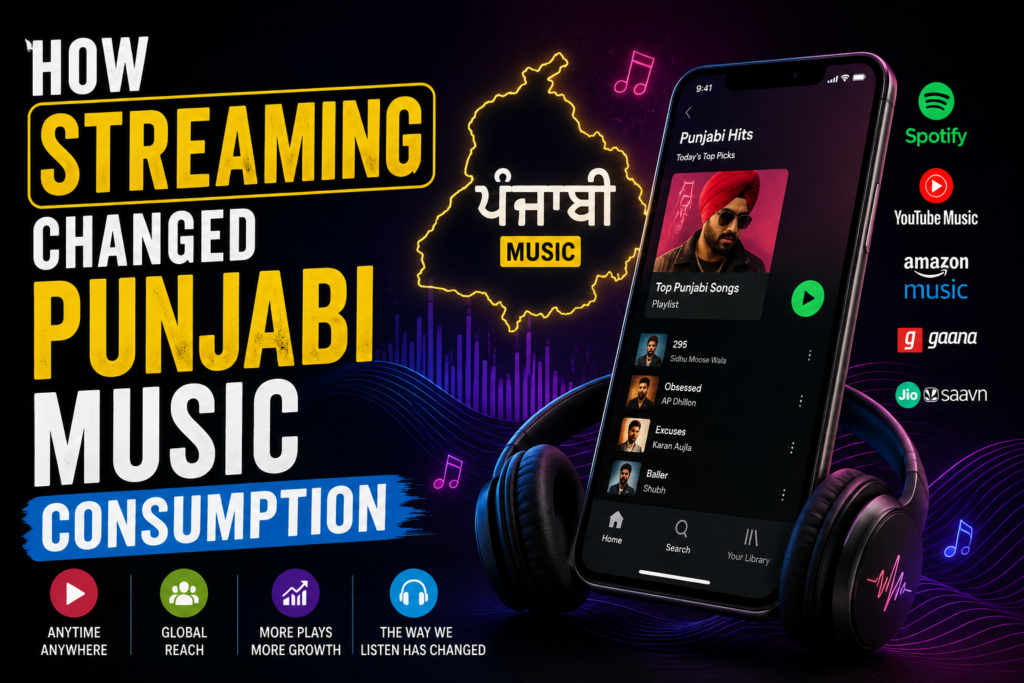
Streaming platforms have transformed how audiences discover, listen to and engage with Punjabi music across India and overseas markets.
Punjabi music has undergone a major transformation over the past decade. The way listeners discover, consume and share Punjabi songs has changed from buying or downloading individual tracks to accessing millions of songs through streaming platforms.
This shift has affected not only listeners but also singers, music labels, producers, filmmakers and the broader Punjabi entertainment industry.
Streaming has made Punjabi music easier to access across India and international markets. At the same time, it has changed how songs are promoted, how artists build audiences and how the success of a track is measured.
The result is a Punjabi music ecosystem that is increasingly digital, global and data-driven.
From Individual Songs to Always-Available Music
Earlier, music consumption was largely based on physical formats, television channels, radio and downloaded songs.
Listeners often discovered new music through:
- Music television
- Radio
- CDs and other physical formats
- Friends and family
- Local music stores
- Films
- Live performances
Streaming changed this behaviour.
A listener can now search for an artist or song and immediately access an extensive catalogue. There is no need to own a physical copy or download every track before listening.
This has made music consumption more convenient and continuous.
Playlists Changed Music Discovery
One of the biggest changes brought by streaming is the rise of playlists.
Listeners no longer have to search for every individual song. Playlists can group tracks according to:
- Mood
- Genre
- Artist
- Language
- Activity
- New releases
- Popular songs
- Personal listening history
For Punjabi music, this has created another route for artists to reach audiences.
A listener searching for Punjabi workout music, romantic songs, party tracks or new releases can discover artists they may not have previously followed.
This means music discovery is no longer completely dependent on traditional promotion.
Punjabi Music Became Easier to Discover Globally
Streaming has reduced geographical barriers.
A Punjabi song released in India can be accessed by listeners in Canada, the UK, USA, Australia and other countries almost immediately.
This is particularly relevant to Punjabi music because its audience is spread across several international markets.
The overseas Punjabi audience can now follow new releases without waiting for physical distribution or television programming.
This has strengthened the connection between Punjabi artists and diaspora listeners.
The Diaspora Became a Digital Audience
Punjabi music has always had an important relationship with the diaspora.
However, streaming has changed how that relationship works.
Earlier, overseas listeners might discover Punjabi music through community events, television, radio, family connections and physical music collections.
Today, streaming platforms allow listeners to maintain a direct connection with new Punjabi releases.
A Punjabi listener living outside India can follow the same artists, songs and albums being consumed by audiences in Punjab.
This creates a much more connected music market.
YouTube and Streaming Work Together
Punjabi music consumption cannot be understood through audio streaming alone.
YouTube has become another major discovery and consumption platform for music.
A song can exist simultaneously as:
Audio Track + Music Video + Short Video Content + Social Media Clip
This creates multiple opportunities for the same song to reach audiences.
A listener may first discover a song through a short video, watch the full music video and later listen to the audio version through a streaming service.
The boundaries between music discovery and social-media discovery have therefore become increasingly blurred.
Music Videos Still Matter
Despite the growth of audio streaming, visual presentation remains important in Punjabi music.
Music videos can help establish:
- Artist identity
- Fashion
- Locations
- Storytelling
- Production quality
- Dance
- Film connections
For newer artists, a strong visual presentation can also help differentiate a song in a crowded digital environment.
The song is no longer consumed only as audio.
It can become a complete digital entertainment product.
Short-Form Video Changed Song Promotion
Short-form content has created another important promotional route.
A small section of a song can become popular independently of the complete track.
A memorable hook, dance step, lyric or visual moment can be used in short videos and shared across social platforms.
This can introduce a song to people who may not have actively searched for Punjabi music.
However, short-form popularity should not automatically be considered equivalent to long-term streaming success.
Attention and sustained listening are different measurements.
Artists Can Build Audiences Directly
Streaming and social media have reduced the dependence of artists on traditional gatekeepers for audience discovery.
An emerging singer can release music digitally and begin building an audience without first becoming a major television or radio personality.
Social media can then support the streaming release.
The artist can communicate directly with listeners through:
- New-song announcements
- Behind-the-scenes content
- Live sessions
- Short videos
- Interviews
- Concert updates
- Personal posts
This has made artist branding an important part of the modern Punjabi music business.
The Role of Music Labels Has Also Changed
Music labels remain important, but their responsibilities have expanded.
A modern release may require coordination between:
- Recording
- Distribution
- Streaming platforms
- YouTube
- Social media
- Marketing
- Music videos
- Artist management
- Live events
The digital environment allows labels to monitor how audiences respond to songs almost immediately.
This can influence promotional decisions during the life of a release.
Data Has Become More Important
Streaming platforms generate large amounts of listening data.
Depending on the platform and available reporting, industry participants can examine indicators such as:
- Streams
- Listeners
- Playlist placements
- Repeat listening
- Audience locations
- Engagement
- Release performance over time
This has changed the way music companies evaluate releases.
Instead of relying entirely on physical sales or broad popularity, the industry can observe detailed patterns in digital consumption.
A Song’s Life Can Be Longer
Traditional music releases often depended heavily on the initial promotional period.
Streaming has changed the potential lifespan of a song.
A track released months or even years earlier can be rediscovered through:
- Playlists
- Social media
- New artist releases
- Music trends
- Films
- Short-form videos
- Listener recommendations
This creates the possibility of a second or third wave of attention.
For artists and labels, catalogue management has therefore become increasingly important.
Older Punjabi Songs Can Find New Audiences
Streaming is not only about new releases.
Older Punjabi songs can also benefit from digital availability.
Younger listeners can discover music from previous generations through playlists, recommendations and social media.
This creates a connection between different eras of Punjabi music.
An older song can become relevant again without being re-released in a traditional format.
This is one of the most important changes brought by digital distribution.
Streaming Changed Listener Habits
Listeners have more control over what they hear.
Instead of waiting for a radio station to play a particular song, they can choose it immediately.
This has made music consumption more personalised.
The listener is no longer simply receiving music.
The listener is actively building a personal music library through playlists, follows and recommendations.
Albums and Singles Have Different Roles
Streaming has also influenced how music is released.
Singles can generate repeated attention throughout the year.
Artists can release individual songs instead of waiting to complete a traditional album cycle.
For the Punjabi music industry, this can create a more continuous release calendar.
At the same time, albums and EPs still provide opportunities for artists to establish a broader musical identity.
The digital environment therefore supports multiple release strategies.
Streaming Changed the Relationship Between Music and Films
Punjabi cinema has also benefited from the changing music ecosystem.
A film song can be promoted independently before a movie reaches theatres.
If audiences connect with the music, it can create awareness for the film.
This creates a marketing relationship between:
Song → Artist → Social Media → Film Awareness → Theatrical Interest
However, a successful song does not guarantee that the corresponding movie will become a box-office success.
Music can create awareness, but the film still depends on content, audience response, distribution and other commercial factors.
Music Can Help Introduce Film Actors
A popular film song can also increase visibility for actors.
When a music video receives significant attention, viewers may become more familiar with the performers appearing in it.
This is particularly relevant in Punjabi cinema, where the boundaries between music and film careers can sometimes overlap.
Artists working across music and cinema can potentially carry audiences from one entertainment format to another.
International Consumption Is Becoming More Important
Streaming has made international Punjabi music consumption easier to track and sustain.
An artist does not need to physically travel to every country to release a song.
The same digital release can reach audiences across multiple territories.
Live concerts, community events and international tours can then build on that digital connection.
This creates a broader ecosystem:
Streaming → Social Media → Live Events → Community → Streaming
Each part can reinforce the others.
Streaming Also Increased Competition
The digital revolution has created opportunities, but it has also created a major challenge.
There is now an enormous amount of music available to listeners.
Every new Punjabi release competes not only with other Punjabi songs but also with Hindi, English and international music.
This makes discovery more difficult.
Artists therefore need more than a song release.
They need a strategy for getting that song noticed.
Virality Is Not the Same as Success
One of the biggest misconceptions in the digital music business is that viral attention automatically means long-term success.
A song may receive significant attention through a short clip without generating sustained listening.
Similarly, a track may not become a major social-media trend but continue to receive steady streams over a long period.
Therefore, streaming performance should be evaluated through multiple indicators rather than one viral moment.
What Streaming Means for Emerging Artists
For new Punjabi artists, streaming has lowered some barriers to entry.
An artist can potentially reach listeners without having a large traditional distribution network.
But accessibility has also increased competition.
Thousands of songs are released across digital platforms, making it difficult for an unknown artist to stand out.
This makes consistency, distinctive identity, quality production and audience engagement increasingly important.
The Punjabi Music Industry Is Becoming More Data-Driven
The traditional music business relied heavily on indicators such as physical sales, radio popularity and television exposure.
Streaming has introduced a much larger data layer.
Labels and artists can study where listeners are located, which songs receive repeat attention and how audiences respond after a release.
This does not eliminate traditional forms of music judgement.
But it gives the industry additional information for making business decisions.
What Streaming Means for Punjabi Music in 2026
The Punjabi music industry in 2026 operates across several connected platforms.
A single release can move through:
Streaming Platforms
↓
YouTube
↓
Short-Form Video
↓
Social Media
↓
Live Events
↓
Film and Entertainment
This interconnected system has changed how songs are marketed and consumed.
The biggest change is not simply that people stream more music.
It is that music has become continuously available, globally accessible and closely connected to digital discovery.
The Future of Punjabi Music Consumption
The next phase of Punjabi music will likely be shaped by even greater integration between streaming, social media, video and live entertainment.
Artists will continue to build direct relationships with listeners.
Music companies will have more consumption data.
Older songs will remain available alongside new releases.
International audiences will continue to consume Punjabi music from wherever they live.
At the same time, competition for attention will become more intense.
The industry will therefore need to balance creativity with effective digital distribution and audience understanding.
Conclusion
Streaming has fundamentally changed Punjabi music consumption.
It has made songs easier to access, allowed artists to reach international audiences and created new ways for listeners to discover music.
Playlists have changed discovery. YouTube and short-form video have expanded visual consumption. Social media has brought artists closer to audiences. Data has given music companies new ways to understand listening behaviour.
Most importantly, streaming has helped transform Punjabi music from a largely regional entertainment category into a digitally connected global ecosystem.
But the technology itself does not guarantee success.
A song still needs something that audiences want to hear.
As Punjabi music continues to evolve in 2026 – 2027 , the biggest opportunity lies in combining strong music, smart digital distribution, audience connection and long-term catalogue value.
The streaming era has not simply changed where Punjabi music is played.
It has changed how Punjabi music is discovered, shared, remembered and consumed.