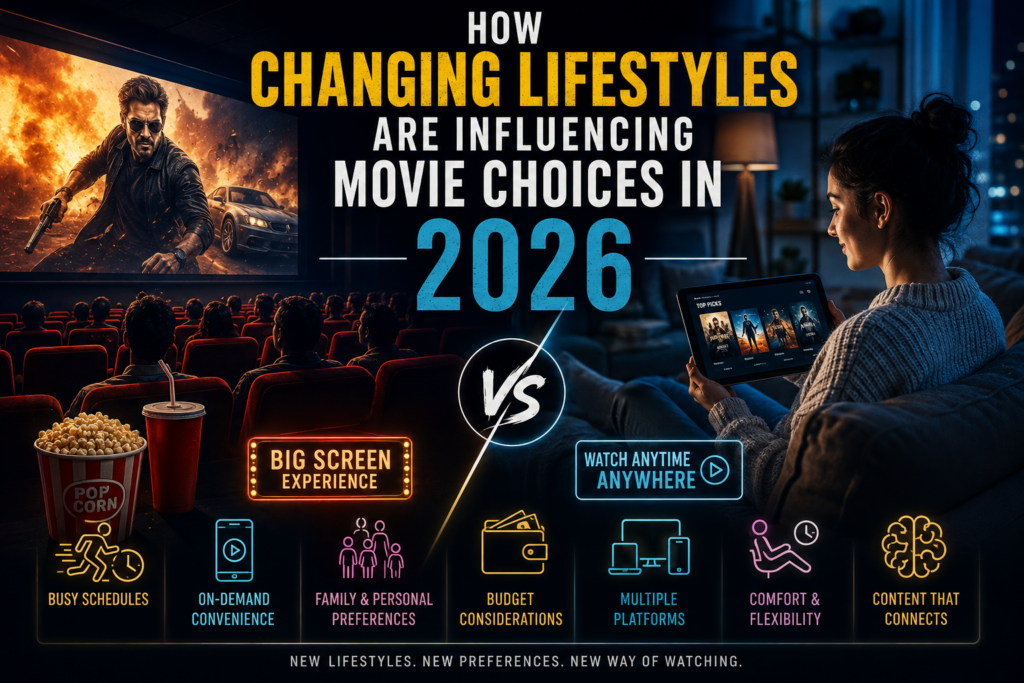
How changing lifestyles, streaming habits, social media, work patterns and evolving entertainment preferences are influencing the movies audiences choose in 2026.
The way people watch movies is changing.
A decade ago, going to a cinema was one of the primary entertainment options for many audiences. Today, viewers have access to movies, web series, short videos, gaming, social media and international content from the same devices they use every day.
As lifestyles become faster and entertainment choices become broader, audiences are becoming more selective about the movies they spend their time and money on.
This change is influencing not only what people watch, but also where, when and why they choose to watch it.
For the film industry, understanding these lifestyle changes has become an important part of creating, marketing and distributing movies.
Convenience Has Become a Major Factor
Modern audiences often have busy schedules.
Work, education, commuting, family responsibilities and digital activities compete for people’s limited leisure time.
Streaming platforms have benefited from this change because they allow viewers to watch content whenever they want.
A cinema requires planning.
An OTT platform does not.
This simple difference can influence the viewing decision.
A viewer may choose a theatre when a movie feels like an event, but choose streaming when convenience is more important.
The Rise of Flexible Entertainment
Entertainment is no longer restricted to a particular time or location.
People can watch content:
- At home
- During travel
- During breaks
- On smartphones
- On laptops
- On televisions
- With headphones
This flexibility has changed audience expectations.
Viewers increasingly expect entertainment to fit around their lifestyle rather than changing their schedule completely for entertainment.
The Big-Screen Experience Still Has a Place
Despite the growth of streaming, cinema has an advantage that home viewing cannot completely reproduce.
The theatrical experience combines:
- Large screens
- Powerful sound
- Darkness
- Shared audience reactions
- Social interaction
- A dedicated entertainment environment
This makes theatres particularly attractive for films designed as large-scale experiences.
Action movies, event films, major franchises and visually spectacular productions can create stronger reasons for audiences to leave home.
Family Time Is Changing Movie Choices
Family structures and routines also influence entertainment decisions.
A family may prefer movies that can be enjoyed by multiple age groups.
This can increase demand for:
- Family comedies
- Clean entertainers
- Animation
- Adventure films
- Festival releases
- Emotional dramas
When a movie provides something different generations can enjoy together, the cinema visit can become a shared family activity.
Younger Audiences Discover Movies Differently
Younger viewers increasingly discover entertainment through digital platforms.
Instead of seeing a movie advertisement only on television or a billboard, they may first encounter it through:
- Instagram Reels
- YouTube
- Short-form videos
- Memes
- Influencer content
- Fan communities
- Social media discussions
This means movie discovery often begins before a viewer actively searches for the film.
For studios, digital visibility has therefore become an important part of audience-building.
Social Media Is Influencing Expectations
Before buying a ticket, audiences can now see thousands of reactions to a movie.
They can watch:
- Trailer reactions
- Reviews
- Memes
- Short clips
- Audience comments
- Interviews
- Behind-the-scenes footage
This creates a much more informed audience.
A viewer may already have an opinion about a movie before watching it.
That can help a film when conversations are positive, but it can also make audiences more cautious when early reactions are negative.
The Rise of Short-Form Content
Short-form video has changed attention patterns.
People increasingly consume entertainment in short, easily accessible pieces.
This does not mean audiences have stopped watching long movies. Instead, it means filmmakers and marketers have to compete for attention before the movie even begins.
A trailer, song, dialogue or scene may need to capture attention quickly enough to make audiences interested in the full product.
Global Content Is Changing Local Preferences
Streaming platforms have made international entertainment more accessible.
Indian viewers can now easily encounter:
- Korean dramas
- Hollywood films
- Spanish series
- Japanese animation
- European cinema
- Regional Indian films
This exposure can influence expectations around storytelling, production design, pacing and characters.
Bollywood and Punjabi cinema therefore compete in an increasingly global entertainment environment.
Regional Cinema Is Also Benefiting
The same digital environment that creates competition can also help regional cinema.
A Punjabi film, for example, can reach audiences outside Punjab through theatrical releases, streaming platforms and social media.
Similar opportunities exist for films from:
- Tamil cinema
- Telugu cinema
- Malayalam cinema
- Marathi cinema
- Bengali cinema
- Kannada cinema
Audiences are becoming more comfortable exploring content based on interest rather than language alone.
Changing Work Patterns Affect Movie Viewing
Flexible work arrangements and changing professional schedules have also altered leisure patterns for some audiences.
People may have more opportunities to watch movies at unusual times, while others may have less predictable schedules.
Streaming fits these circumstances particularly well.
Cinema operators and distributors therefore have an increasingly complex audience to understand.
The traditional assumption that everyone watches movies primarily on weekends is becoming less reliable.
Ticket Prices Influence the Decision
Lifestyle choices are closely connected to spending decisions.
A cinema outing can involve more than the ticket itself:
- Food and beverages
- Transportation
- Parking
- Multiple family tickets
When household budgets are under pressure, audiences may become more selective.
They may reserve theatrical spending for movies that appear to offer something special and wait for other titles to arrive on streaming platforms.
Movie Genres Are Not Equally Affected
Different genres can respond differently to lifestyle changes.
| Genre | Potential Audience Behaviour |
|---|---|
| Action | Strong theatrical appeal |
| Comedy | Often benefits from group viewing |
| Family | Can encourage shared outings |
| Horror | Can benefit from communal reactions |
| Romance | Can work across theatres and OTT |
| Thriller | Strong potential on both platforms |
| Experimental Cinema | May find niche audiences through OTT |
| Large-Scale Franchise | Strong event-cinema potential |
Theatrical performance therefore depends partly on whether a movie’s genre matches the viewing environment.
The Importance of Event Cinema
One of the strongest developments in modern cinema is the idea of event viewing.
Audiences are more likely to make special plans for a film when they believe it is something they should experience immediately.
Event cinema can be created through:
- Major franchises
- Spectacular visuals
- Strong music
- Popular stars
- Cultural relevance
- Large-scale promotions
- Special screenings
The goal is to make the movie feel like more than another piece of content.
Word of Mouth Has Become Even More Powerful
Lifestyle changes have also strengthened the role of recommendations.
People constantly exchange entertainment suggestions through:
- Messaging apps
- Social media
- Group chats
- Online communities
- Workplace conversations
A positive recommendation from someone trusted can become a powerful reason to watch a movie.
This is particularly important after release, when actual audience response begins influencing undecided viewers.
Audiences Want Value for Their Time
Time has become one of the most valuable resources in modern entertainment.
A viewer deciding whether to watch a movie is effectively asking:
Is this worth two or three hours of my time?
This is why storytelling, pacing and audience satisfaction matter.
A film may have an impressive marketing campaign, but if viewers feel that the experience did not justify their time, long-term word of mouth can suffer.
What This Means for the Film Industry
Changing lifestyles require filmmakers and distributors to think differently.
The industry increasingly needs to understand:
- Who is the audience?
- What does that audience value?
- Where do they discover movies?
- How much are they willing to spend?
- Do they prefer theatres or streaming?
- What makes a movie feel like an event?
These questions influence everything from production and marketing to release strategy.
The Future of Movie Watching
The future is unlikely to belong entirely to either cinemas or streaming platforms.
Instead, audiences will increasingly choose based on the type of experience they want.
A large-scale movie may demand a theatrical visit.
A niche drama may be more attractive at home.
A family film may become a weekend outing.
A thriller may be discovered through streaming.
The important point is that audiences now have more control than ever before.
Conclusion
Changing lifestyles are reshaping movie choices by changing the value audiences place on time, convenience, experience, price and social interaction.
Streaming has made entertainment easier to access, while theatres continue to offer spectacle and shared experiences that home viewing cannot completely replace.
For Bollywood, Punjabi cinema and the wider Indian film industry, the challenge is no longer simply to make people watch movies.
It is to give audiences a compelling reason to choose one movie, one platform and one viewing experience over countless alternatives.
The films that understand these changing habits—and deliver the right experience to the right audience—will be better positioned to remain relevant in an increasingly competitive entertainment market.